
Prof. Dr. Mohammed Ali Qahtan
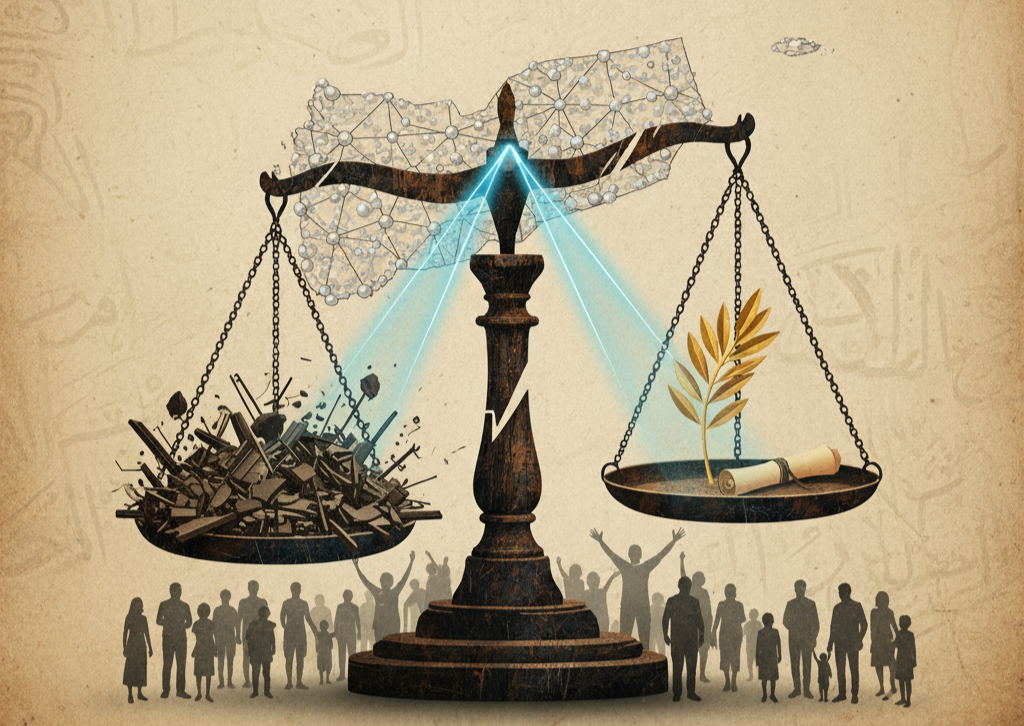
Transitional justice in Yemen is an essential and highly significant demand; however, its implementation must contend with the complex circumstances the country is currently experiencing. Its main objective is to address the grave human rights violations that took place during earlier phases of conflict.
In this regard, I do not see the possibility of applying transitional justice principles before peace is achieved and the state is rebuilt. Nevertheless, the efforts undertaken by the Transitional Justice Team under the Office of the UN Secretary-General’s Envoy may contribute to entrenching the values of transitional justice in its broader sense—acknowledging serious violations in past conflicts and providing reparations. Such efforts could pave the way for peace, the restoration of the state and its institutions, and lasting security and stability for all components of society and political actors in a country torn apart and exhausted by wars and conflicts.
In our view, what can be pursued at present is focusing on institutional reform as a means to restore state institutions within the framework of the internationally recognized legitimate authority. This can be achieved by strengthening the existing institutional structures of the legitimate government in the following areas:
---
First: The Political Sphere
Institutional reform in this field requires enhancing the Presidential Leadership Council (PLC) to be capable of addressing internal divergences among its members and improving its organizational and administrative structure. The PLC should operate as a unified executive body that establishes sound and coherent administrative principles capable of leading the state through a highly complex transitional period. This necessitates:
1. Integrating all military and security components represented by PLC members into the framework of the state—specifically the Ministries of Defense and Interior. This is possible if there is sufficient political will from the leadership of the main states supporting legitimacy, particularly Saudi Arabia and the United Arab Emirates.
2. Reconstructing the Council of Ministers as the executive arm of the PLC to restore, rebuild, and rehabilitate state institutions. This requires removing unqualified and inactive ministers who fail to fulfill their ministerial mandates, ensuring that the government comprises only capable actors who can rebuild their respective administrative and economic units. The government must also receive robust backing from the PLC and its primary international supporters—especially Saudi Arabia and the UAE—to enable it to meet its obligations.
---
Second: The Economic Sphere
Institutional reconstruction in this domain requires:
Unifying monetary policy and the national currency through full control of the functions of the Central Bank of Yemen and restructuring the Yemeni banking system with strong, independent, and competent governance, headquartered in Aden.
Addressing the collapse of the state’s financial apparatus by rebuilding the Ministry of Finance and its provincial branches, enhancing their ability to regulate state revenue channels, and enforcing the financial law and budgetary regulations to ensure effective fiscal management.
---
Third: The Humanitarian Sphere
This requires action in the following areas:
Releasing all prisoners and detainees held for political reasons or matters of public opinion from all state-run prisons and detention facilities—whether under Houthi or legitimate government control.
Reopening all official inter-provincial roads and international border crossings (land, sea, and air) to facilitate communication, transportation, and trade, thereby reviving investment activities and fostering economic recovery, prosperity, and improved living conditions for citizens.
---
Fourth: The Social Sphere
To achieve social cohesion, stability, and security, the following steps are necessary:
Ensuring the delivery of public services to all citizens across Yemen’s governorates, as peace and state legitimacy cannot be realized without citizens accessing essential services such as electricity, clean water, sanitation, security, justice, education, healthcare, and other vital public services.
Broad participation of diverse social groups in state leadership institutions, ensuring inclusivity across all levels of governance.
Channelling international humanitarian aid through internationally recognized state institutions and directing it toward sustainable development, particularly in rural areas through agriculture and related activities. This is vital given that rural populations constitute over 70% of Yemen’s total population and represent the majority of the country’s poor.
---
Fifth: The Judicial Sphere
The judiciary is of critical importance in realizing the objectives of transitional justice. It is well known that Yemen’s judicial system is in a dire state, plagued by rampant corruption. Therefore, rebuilding and cleansing this institution from corruption must be a top priority. It should occupy a central place in the activities of the Transitional Justice Team under the UN Envoy’s Office, as well as in the agendas of the state’s political, economic, and social institutions.

